


Follow Batteries Plus


Power Tool Battery Buying Guide
- The Reality of Lock-In: Once you own the tool, you are tied to that specific battery platform. You cannot swap between brands without risky adapters.
- Experts in Charge: Let us help you find the perfect battery for your tool.
- Golden Rule: Always buy Lithium-Ion if possible. Avoid NiCd or NiMH for modern work.
In the modern job site or home workshop, you aren't just buying a tool; you are buying into a battery platform. Because most major manufacturers use proprietary connection systems, the batteries you choose often dictate which tools you can add to your collection for years to come.
Leading the Charge: The "Big Four" Ecosystems
Each major brand has developed its own specialized battery technology to serve different user segments, from weekend DIYers to industrial contractors.
Milwaukee: The Heavy-Duty Professional Choice
Milwaukee focuses on high-performance "trade-focused" solutions for professionals. Their systems are divided into the M12 (12V) for compact work and the M18 (18V) for heavy-duty tasks.
- REDLITHIUM™: The baseline technology featuring "Redlink Intelligence," which allows the tool and battery to communicate to prevent overload and overheating.
- HIGH OUTPUT™: These packs utilize larger 21700 cells that provide 50% more power and run 50% cooler than standard packs under heavy stress.
- FORGE™ (New for 2026): Milwaukee's most advanced line, utilizing pouch cell and tabless technology to offer the fastest charging speeds (80% in 15 minutes) and the longest cycle life in the history of the brand.
DeWalt: Flexibility and "FLEXVOLT"
DeWalt is famous for its versatility and the ability to bridge the gap between standard 20V tools and high-powered 60V machinery.
- 20V MAX: The standard slide-style battery used for most drills, saws, and impact drivers.
- FLEXVOLT®: A revolutionary "dual-voltage" battery. It automatically switches to 60V when plugged into heavy machinery (like a concrete saw) and switches back to 20V for standard tools, providing massive runtime.
- POWERSTACK™: DeWalt's breakthrough pouch-cell technology. These batteries are 25% more compact but deliver 50% more power than cylindrical cell batteries, making them ideal for overhead work where weight is a factor.
Ryobi: The King of Compatibility
Ryobi's 18V ONE+ system is widely considered the most consumer-friendly platform because it hasn't changed the battery shape since 1996.
- Total Backward Compatibility: You can take a battery bought today and plug it into a Ryobi tool from twenty-five years ago.
- ONE+ HP (High Performance): These batteries feature extra contact pins that "unlock" higher torque in Ryobi's brushless tools.
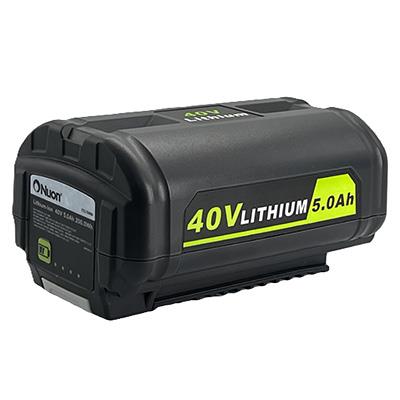
- 40V Line: A separate platform designed specifically for outdoor power equipment like lawnmowers and chainsaws, providing gas-like power without the fumes.
Makita: Precision and Rapid Charging
Makita is often the choice for users who value thermal management and extremely fast charge times to minimize downtime.
- LXT® (18V): One of the largest tool ecosystems in the world. Makita's "Rapid Optimum Charger" uses a built-in fan to cool the battery during the charge cycle, allowing a 5.0Ah battery to fully charge in just 45 minutes.
- XGT® (40V Max): A dedicated high-voltage system for industrial applications. XGT batteries feature a heavy-duty outer casing and advanced digital communication to survive the harshest job site conditions.
Choosing Your Replacement: Matching the Battery to the Tool
While you are tied to the brand of your tool, you often have a choice in the capacity of the replacement battery. Matching the right specs to your workload ensures you aren't carrying unnecessary weight or running out of power mid-job.
- Milwaukee replacement: You need high-drain reliability for trade-specific tools. If you are replacing a standard M18 pack, consider upgrading to a HIGH OUTPUT or FORGE series for better performance in high-demand tools like grinders or circular saws.
- DeWalt replacement: You need flexibility. If you own both 20V and 60V tools, a FLEXVOLT replacement is the only battery that will work across your entire kit.
- Ryobi replacement: You want the best value. Because the fitment has stayed the same for decades, our replacements are the most cost-effective way to refresh a 10-year-old tool.
- Makita replacement: Downtime is your biggest enemy. Our Makita-compatible replacements are designed to work with high-speed, air-cooled charging systems for continuous use.
Expert Assistance: Finding Your Perfect Fit
With dozens of voltages, amp-hour ratings, and cell types available, it is incredibly easy to feel overwhelmed by the options. Our Experts are here to help you find the perfect fit with no confusion. Whether you need to know if a high-capacity battery will fit in your specific tool's case or which chemistry is best for your climate, we can identify exactly which replacement battery matches your model and workload.
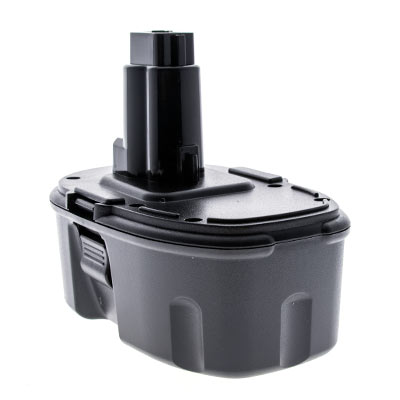
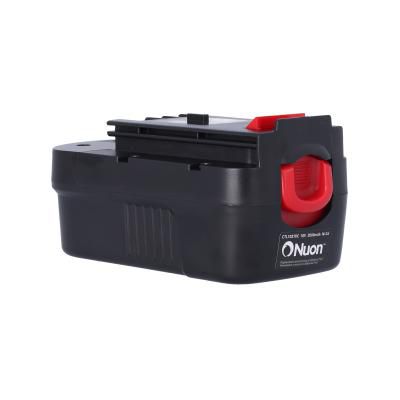
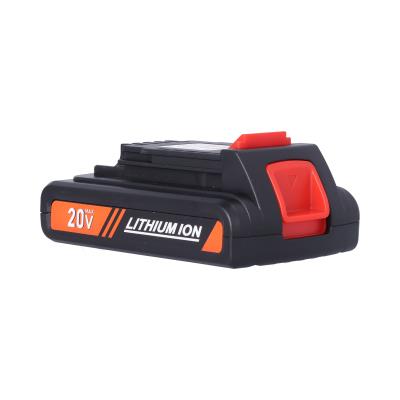
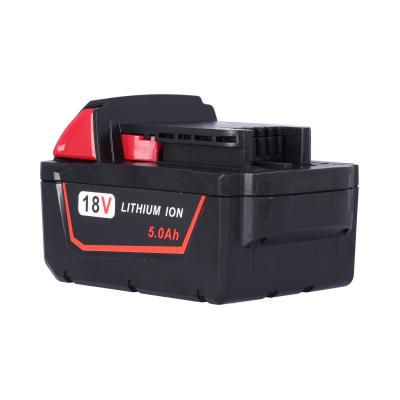
Understanding Battery Chemistries
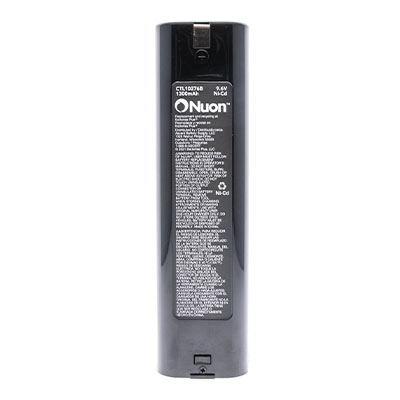
| Chemistry | Status | Weight | Memory Effect | Best For... |
|---|---|---|---|---|
| Lithium-Ion (Li-Ion) | Modern Standard | Lightweight | None | 99% of all modern cordless tools. |
| Nickel Metal Hydride (NiMH) | Legacy | Heavy | Minimal | Replacing batteries for tools from the early 2000s. |
| Nickel Cadmium (NiCd) | Obsolete | Very Heavy | High | No longer recommended due to toxic materials and "memory effect." |
Why Lithium-Ion Won
Lithium-Ion batteries do not have a "memory effect," meaning you don't have to fully drain them before recharging. They also have a very low self-discharge rate; if you leave a Li-Ion battery on the shelf for three months, it will still have nearly the same charge it had when you put it away.
Battery Specifications: What Do the Numbers Mean?
When shopping for batteries, you will see two primary numbers: Voltage and Amp-Hours.
- Voltage (V) = Power: Think of this as the "horsepower." Higher voltage usually means the tool can handle more demanding tasks (e.g., a 60V saw vs. an 18V saw).
- Amp-Hours (Ah) = Runtime: Think of this as the "gas tank." A 2.0Ah battery is small and light (great for a drill), while a 12.0Ah battery is massive and heavy (great for a miter saw or lawnmower).
Frequently Asked Questions
Generally, no. Every brand uses a proprietary physical connection. While third-party adapters exist, sticking to one ecosystem is much safer for several reasons:
- Communication: Modern batteries and tools "talk" to each other via internal chips to regulate heat and power. Adapters often break this communication.
- Over-discharge Protection: Many tools rely on the battery to tell them when to stop drawing power. If an adapter is used, you risk draining the battery so low that it can never be recharged again.
- Warranty: Using adapters or non-native batteries typically voids your manufacturer's warranty instantly.
Modern "smart" chargers (especially from brands like Makita and Milwaukee) will stop charging once the battery is full. However, to maximize battery lifespan, it is recommended to remove it from the charger once it reaches 100%.
Yes. Extreme cold can slow down the chemical reaction in the cells, making them feel "sluggish." If you are working in freezing temperatures, try to keep your batteries in a heated space (like your truck cab) until you are ready to use them.
Heat is the #1 enemy of battery life. If you are pushing a tool through a very heavy cut and the battery becomes hot to the touch, stop and let it cool down. "High Output" or "FLEXVOLT" batteries are designed with better internal spacing to help dissipate this heat more effectively.
Store them at about 50% charge in a cool, dry place. Storing a battery completely empty or 100% full for long periods can cause the cells to degrade faster.